
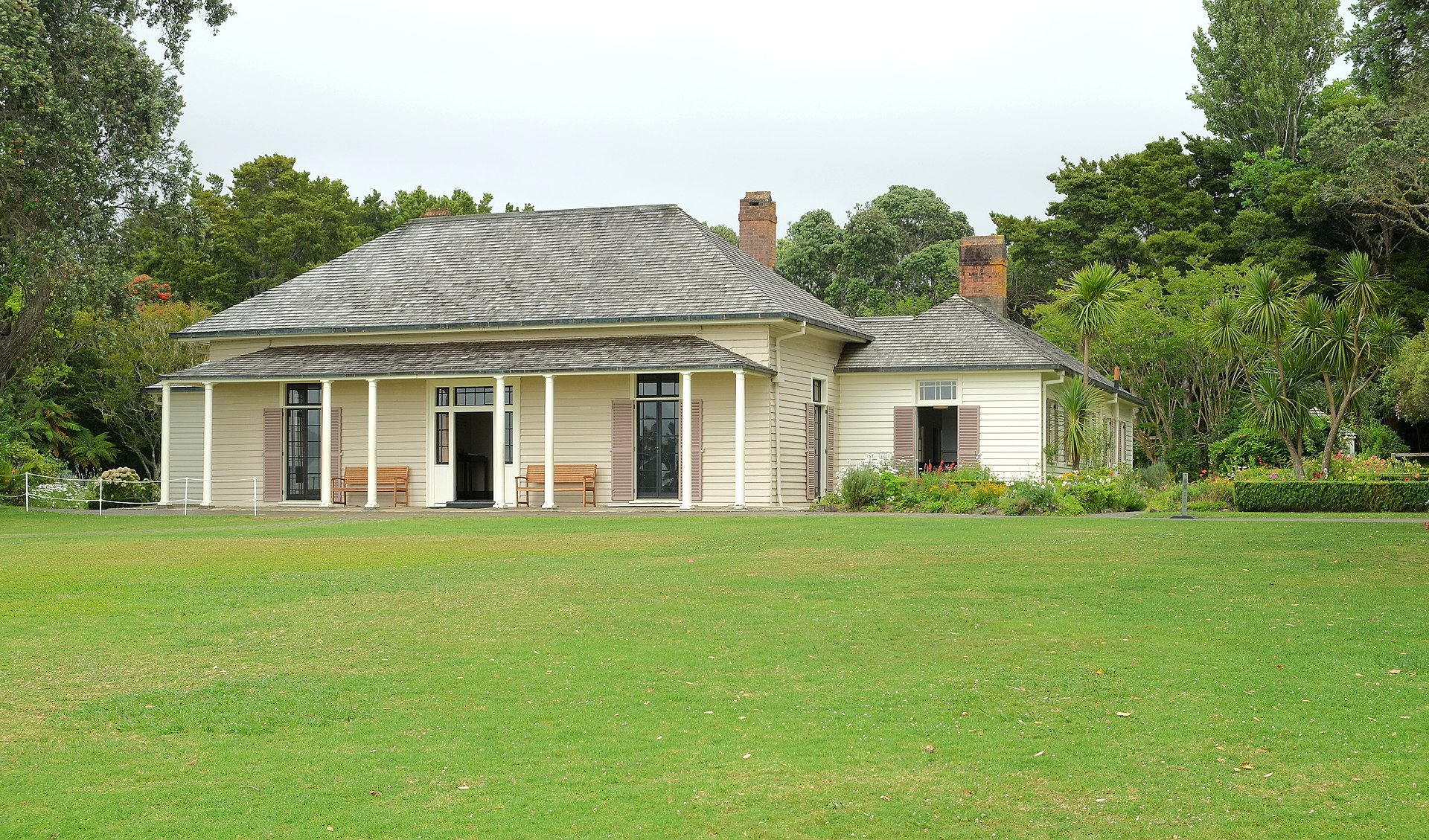
The Treaty of Waitangi (Te Tiriti o Waitangi in Maori), was first signed on 6 February 1840 on the grounds of the house of James Busby – a Scottish farmer and politician who was involved in the initial drafting of the treaty. The building is now known as Treaty House (see above) and is situated in Waitangi, in the Bay of Islands, north of the North Island of New Zealand.
The treaty was signed by representatives acting on behalf of the British Crown and initially by around 45 Maori chiefs, although at the end about 540 signed. This signing was to secure British sovreignty over the Islands of New Zealand, which wasn’t explained in full to the Maori chiefs, who as a consequence lost many of their lands.
Since 1974 the day has been treated as a public holiday but nowadays, the Maori people are more actively involved, using the day as an opportunity to educate the general population about the Maori culture.
New Zealand, and the way the Maoris and their culture is viewed, is very different from the early days in the first decade after it had been signed, as my book, Waireka shows.
“Governor Grant, it was reported, was intending to force the warring tribes to pledge their loyalty once more to the Queen of England (Victoria) and her subjects. Despite the infighting among the tribes, it seemed that the Governor’s message convinced the Haus-Haus and the Muapoko tribes to withdraw without a fight. Therefore, the residents of Frampton and its surrounding areas were able to return to their homes and land once more, grateful that a catastrophe had been diverted. Eliza was relieved that no real fighting had taken place and both Alister and Robert were safe.
Alister was full of admiration for Governor Grant on his return home.’Those savages knew that they had met with an immovable force in Governor Grant. He was so authoritarian, so powerful that I believe he won them over’….
She (Eliza) later shared her feelings with Robert who gave a very different story to that of Alister.
‘I felt such a sympathy with the Haus-Haus and the Muapoko tribe’, he said. ‘I’m so glad we didn’t have to fight them. The Governor had cheated them and his message about loyalty to the Queen didn’t quite stick with me. No, I’m convinced that it wasn’t his presence or his message that caused them to withdraw but rather the sight of the soldiers’ colourful uniforms, badges and bayonets that cowed them into submission rather than anything else.” (Waireka: Sweet Waters p 152-3)
Waireka is published under my maiden name of Sheila Donald is available on my website at www.journojohnson.com under the heading of shop,

or on Amazon in kindle form at https://www.amazon.co.uk/s?k=Waireka%3A+Sweet+Waters+by+Sheila+Donald&crid=3146UM15YSD03

 Journojohnson.com