
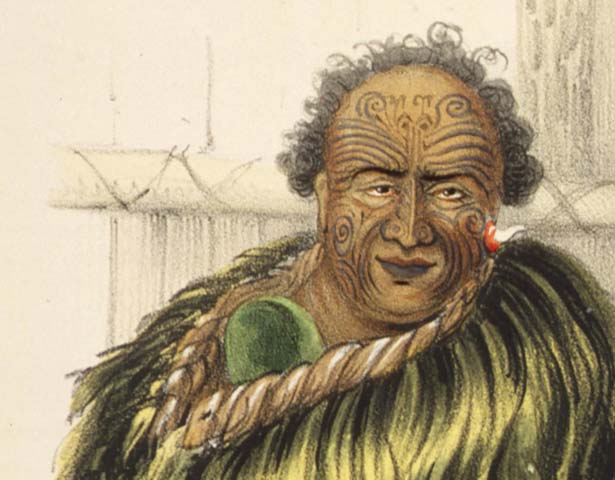
Te Kawau signed the Treaty of Waitangi at Manukau Harbour in March 1840. One reason was that he wanted British protection against future Ngāpuhi raids. He subsequently provided 3,000 acres (1200 hectares), for £50 and a quantity of goods, for the new capital of Auckland on the Waitematā Harbour.
At first Te Kawau was able to manage the relationship between his people and the colonial authorities. He made sure that Māori customary law would, at least initially, be respected. This was reflected in the Native Exemption Ordinance of 1844, through which Māori lawbreakers were punished with a fine, rather than culturally unacceptable imprisonment.
Later however, he began to speak out against land sales. By the time of his death in 1869 Ngāti Whātua owned only a fragment of their former lands, and British law had become dominant.
Adapted from the DNZB biography by Ani Pihema, Ruby Kerei, and Steven Oliver
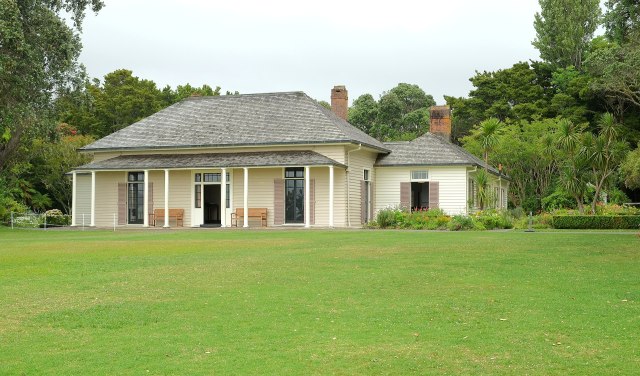
Treaty House, Bay of Islands
With Waitangi Day coming up on Thursday do take a look at this video.
You can also visit my website to get a copy of my book, Waireka: Sweet Waters – under my pen name of Sheila Donald – about some of the early pioneers to the country. However, there was still unrest following the Waitangi Treaty from some of the tribes as you can read in my book on pages 152 -3. My book can be purchased directly from my website http://www.journojohnson.com. During February I am offering it for the special price of just £6, which for a full-length book of over 200 pages, is a great offer. Normally it retails for £9. Please visit my shop page to take advantage of this great offer.
And for just one week from 6 February, Waitangi Day, you can get the kindle of Waireka for just 99p, but hurry the offer closes on 13 February!

 Journojohnson.com