
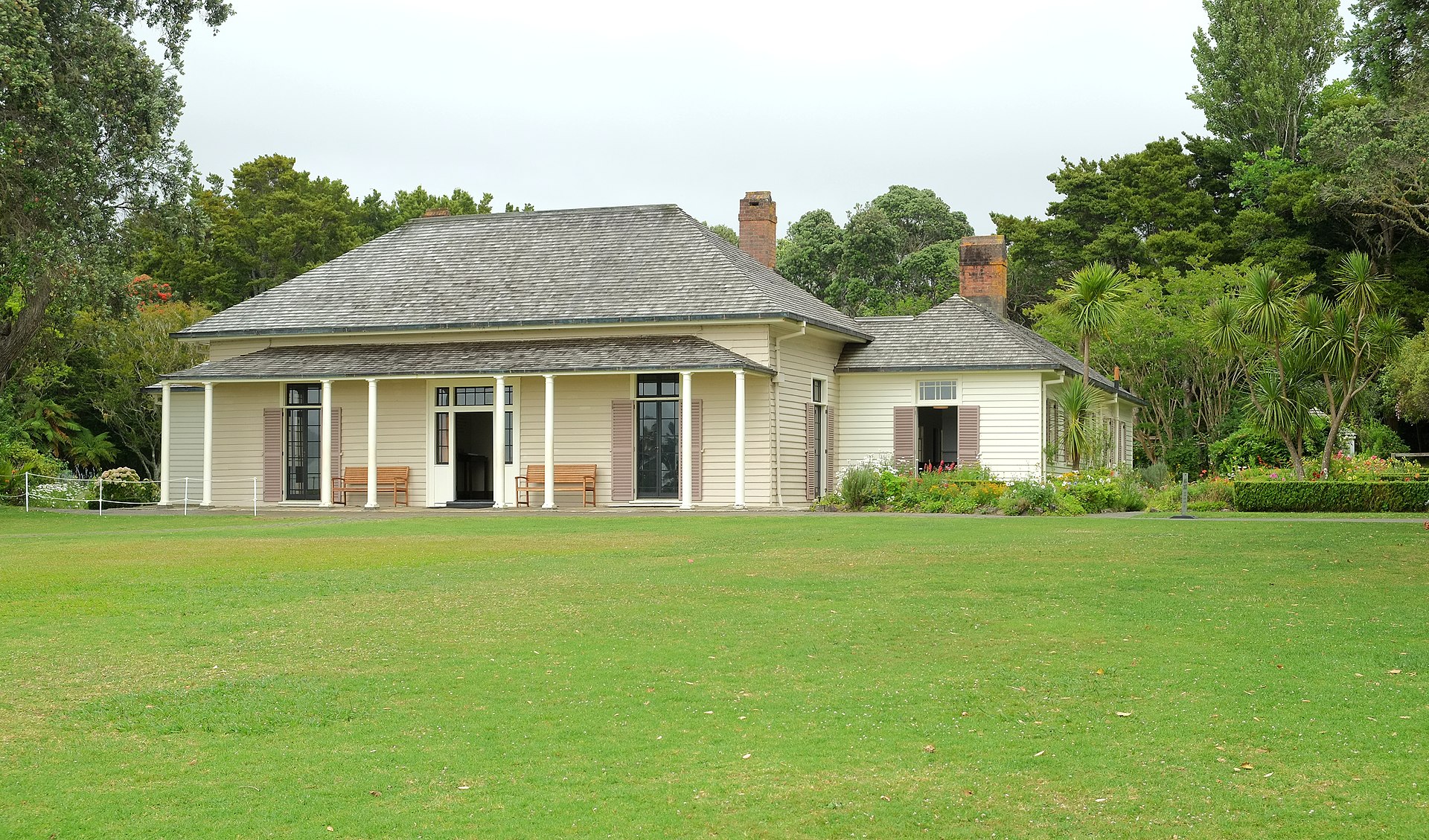
Waitangi Day is celebrated in New Zealand every 6 February. This year this falls on a Friday. It has been acknowledged and celebrated in New Zealand since 1934 but wasn’t made a public holiday until 1974.
The treaty was first signed on 6 February 1840 in this treaty house in the Bay of Islands in the north of the North Island. The occasion was the meeting of the Maori tribes – the indigenous people of the islands before the arrival of the British – signing their lands and allegiance over to the Queen of England, Victoria. It was signed by representatives of the British Crown present in the New Zealand Islands, or Pakeha, as the Maori called them, and by 500 Maori chiefs. But it seems that not all of those understood or were told, the full implications of the treaty they were signing. For a start, the Islands would now be called ‘New Zealand’ after the Dutchman, Abel Tasman who discovered them – Zealand being an area of Holland – rather than Aotearoa as the Maoris had called the Islands. Also the chiefs were cheated out of much of their tribal land. Therefore, the event can be seen as a rather controversial one.
In my book, Waireka: Sweet Waters, based on my family history as early pioneers of New Zealand, I deal with some historical unrest between the tribes and the newly established, Pakeha, or British and European settlers. I deal with two different viewpoints on pages 152-3 of my book between that of dairy farmer, Alister Douglas, and that of his wife, Eliza and the Reverend Robert Yate.
“Alister was full of admiration for Governor Grant on his return home. ‘Those savages knew that they had met with an immovable force in Governor Grant. He was so authoritarian, so powerful that I believe he won them over.”
“Eliza later shared her feelings with Robert who gave a very different story to that of Alister.
‘I felt such a sympathy with the Haus-Haus and the Muapoko tribe’, he said…The Governor had cheated them and his message about loyalty to the Queen didn’t quite stick with me. No, I’m convinced that it wasn’t his presence or his message that caused them to withdraw but rather the sight of the soldiers’ colourful uniforms, badges and bayonets that cowed them into submission rather than anything else’. And Eliza agreed.”
This unrest was over a decade after the treaty had been signed. Maybe it was then that the tribes were beginning to realise that the treaty didn’t entirely work in their favour.

You can find my book either on kindle on Amazon at https://www.amazon.co.uk/Waireka-Sweet-Waters-Sheila-Donald-ebook/dp/B0BXT1VN51 or in Paperback directly from me at just £8.20 including P&P for the month of February (Amazon and other stockists are selling it for over £9!) so a real bargain!

 Journojohnson.com