
I would like to contrast two of the books dealing with the issue of Disability that I have read recently.
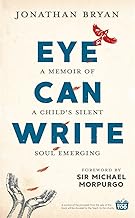
Eye Can Write, is a book I had wanted to read for a long time and I wasn’t disappointed. Written by a young boy of just 12 years old with severe cerebral palsy unable to move, read, talk or do very much of his own free will, Jonathan’s level of intelligence is extraordinary. Yet, he shares with the reader the fact that he wasn’t considered worth teaching to read or write or be educated in any normal sense of the word.
Jonathan says, “I have written this book for those who can’t yet read and write….for non-verbal children, learning to read and write is not just a life skill. It unlocks our voice.” (p 173)
Jonathan takes us on the frustrating journey of a child who has real ability but, apart from his physical limitations, feels the frustration of not being able to communicate in the simplest way until specialist teachers and his mother unlock his abilities with an eye-gaze computer. Jonathan is so grateful to be able to communicate that he writes this book to share with us his frustrations and successes donating a portion of the sales of his book to the ‘Teach Us Too’ charity for children like himself. Sadly, Jonathan’s difficult life came to an end in 2025 but not without him making a huge difference to the lives of disabled and neurodivergent children. He received a Diana Legacy Award from Prince William and Prince Harry, appeared on a CBBC television programme, spoke with his mother in the House of Lords, and met writer, Sir Michael Morpungo, who writes the foreword to Jonathan’s book.
The Clematis Tree by Ann Widdecombe,by contrast, tells the story from the parents point of view and although this is partly true of Jonathan’s story, we do not get inside the mind of Jeremy the disabled child at all, only seeing things from his point of view prior to the accident.
The Wellings family, Mark and Claire are an average family until their 4 year old son, Jeremy is run over by a speeding car and terribly disabled. The only connection between this book and Jonathan’s is that Jonathan’s mother, Chantal was also involved in a car accident when Jonathan was still in her womb.
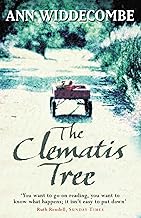
In Ann Widdecombe’s book we see the effect Jeremy’s severe disability has not only on the marriage of Mark and Claire, but also on their younger daughter, Pippa, a baby when the accident happened. Author, Ann Widdecombe also skillfully brings in the Bill of Assisted Dying into her story through Claire’s sister, Sally, and MP fighting for the Bill. The reader is left to come to their own conclusions as to whether this Bill is a good thing or not and how it might affect disabled children like Jeremy.
In the case of Jonathan Bryan’s book, his family seem to be brought closer together through Jonathan’s problems and in the Clematis Tree we are left wondering whether Mark and Claire’s marriage would have floundered anyway without having to look after Jeremy. Jeremy eventually dies through a tragic accident and Mark and Claire face an uneasy reconcilliation afterwards.
Both Jonathan and Jeremy die as teenagers, Jonathan through natural causes and Jeremy accidently.

 Journojohnson.com
Thank you for sharing this reflection and for highlighting Jonathan Bryan’s work. His story and advocacy for literacy access are incredibly important.
I did want to gently flag something about the use of the term neurodiversity in the post. The two examples discussed (cerebral palsy and a child who becomes disabled after an accident) are actually not examples of neurodiversity.
Neurodiversity refers to natural variations in how human brains work and process information. It usually includes conditions such as autism, ADHD, dyslexia, dyspraxia and Tourette’s. The key idea is that these are different neurological profiles, not necessarily illnesses or injuries.
By contrast:
Both are very real and important disability experiences, but they fall under physical or acquired disability, rather than neurodiversity.
Many neurodivergent people advocate strongly for keeping this distinction clear, because when everything is grouped together under “neurodiversity” it can unintentionally erase the specific experiences and needs of neurodivergent communities.
If you’re interested in books that explore neurodiversity more directly (and often written by neurodivergent authors themselves), a few thoughtful ones are:
They offer really powerful insights into neurodivergent perspectives and experiences.
Thanks again for opening up a conversation about disability and difference
LikeLike
Thank you for your comments, Jane. Yes, you are correct I should just call it disability. Thank you for pointing this out and your knowledge on the subject. I actually have a daughter-in-law and a great nephew who have autism which is quite different from Cerebral Palsy. I should have been more careful. Sorry if I have offended you in any way.
LikeLike